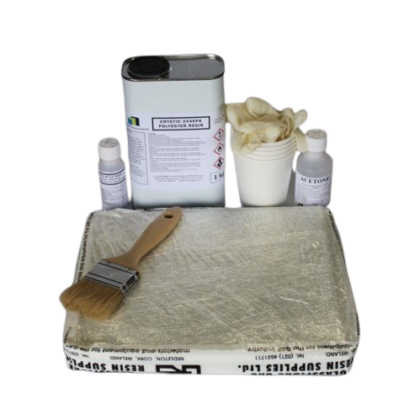

Glassfibre, Polyester Resin, Polyurethane Resin and Silicone materials


Glassfibre and Resin Supplies has been supplying the Fibreglass Industry in Ireland since 1970. We have a wealth of experience and expertise to give our customers a quality service that we can be proud of.

As we also manufacture in GRP through our company  Munster Marine we are able to provide our customers with advice on their projects to completion. This hands on experience for us has ensured our place in the market as quality suppliers to Ireland’s GRP customers.
Posted in Working with Glassfibre | Comments Off

How can I eliminate bubbles in my urethane plastic castings?

Bubbles experienced while casting urethane resins are the nemesis of casters everywhere.  As you may know, urethane resins are moisture sensitive, and often bubbles found in cured urethane plastic are a result of a reaction between the plastic in its liquid state and moisture coming from somewhere.

Common sources of moisture that might react with liquid urethane plastic:

HUMIDITY – urethane plastic will react with moisture in the air, especially if the plastic has a long pot life/working time.

Remedy: work in humidity-controlled environment (air conditioning) with as low a relative humidity as possible. Also ,if possible, use a plastic with a shorter pot life. It will have less time to react with the ambient moisture.  Option; Smooth-on makes a moisture resistant urethane plastic called TASK 7.  it is not as susceptible to moisture as other resins.  More information on this topic can be found on the FAQ section at www.smooth-on.com


Posted in Air bubbles experienced while casting urethane resins | Comments Off

How much rubber/casting material will I need?

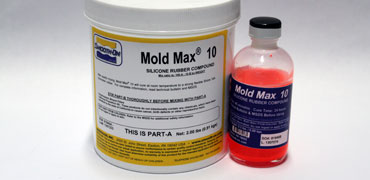
Estimating the amount of rubber that is needed for mould making and also to then make the casting can be a  difficult task.  Smooth-on have come up with some useful tools to try and help with the problem.

Click here to access their Quick Tools calculators

Posted in Calculating quantities rubber moulds and casting | Comments Off

Calculating quantities of glassfibre, resin, flowcoat and catalyst.

To Calculate the quantities of glassfibre, resin, flowcoat and catalyst the following method should be used:
  • Calculate the total area in m² of glassfibre required for the repair, allowing for overlaps,extra layers etc. 1m²= approx.10ft²
  • From the area required, weight of fibreglass can calculated, depending on the grade of material to be used: CSM 450= 450g/m² i.e 1m² of fibreglass weighs 450gms,  CSM 600=600g/m² i.e 1m² of fibreglass weighs 600gms
  • The ratio of resin : fibreglass is approximately 2.5 : 1  i.e 1 kg of fibreglass requires approx. 2.5kgs of resin.
  • Flowcoat will give a coverage of approx 0.5-0.75kg/m²  i.e. 1 kg of flowcoat will cover approx. 1.5m² to 2m²
  • Catalyst should be added at between 1% and 4% by weight depending on ambient conditions and cure time required.  The standard addition rate is 2% (=20gm catalyst per kg of resin)
The ratio applies to all polyester resins, gelcoats, flowcoats etc. unless otherwise specified. Too much or too little catalyst will inhibit cure, while gel time is adversely affected by high humidity and low temperature.


Posted in Calculating quantities of resin | Comments Off

What can I do about air bubbles in my grp laminate?

These are common problems in GRP products, forming between the gelcoat and the glassfibre laminate, particularly at sharp radii as the glassfibres are not able to bend through 90°.  A preventative measure is to make up a resin paste by mixing chalk powder or cabosil into some catalyzed resin and brushing the paste onto the gelcoat as a ‘wet filler’ prior to preceding with the laminating.

Posted in Air bubbles in GRP Laminate | Comments Off

What is flowcoat?

Flowcoat   is similar to gelcoat in consistency, but has a wax additive which prevents tackiness.  It is used as a finishing coat on raw laminates and repair etc.  it can be bought pre-mixed or can be made by adding wax solution to a resin-gelcoat mixture.  (Approximately 40cc per kilo). Non Slip Flowcoat is also available.

Posted in What is Flowcoat? | Comments Off

What is Gelcoat?

Gelcoat is the hard glossy external finish on a GRP product.  It is applied to a prepared mould and takes up the shape and surface texture of the mould.  The surface exposed to the air dries with tackiness so that a good bond is achieved with subsequent laminates.

Posted in What is Gelcoat? | Comments Off

Working with Glassfibre

General Instructions for working with glassfibre

1. Work in dry, well-drained and warm conditions. Dampness and cold inhibit cure.

2. Protect yourself and your clothes. Wear gloves. Wear a fume mask if working in enclosed spaces. Protect your eyes from contact with resin, catalyst and acetone.

3. Thoroughly prepare surface to be worked on, removing all trace oil. dirt, water etc. For repairs to existing GRP ensure a good key is obtained by aggressive sanding with coarse grit sandpaper.

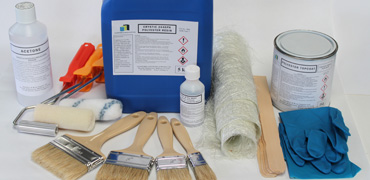
4. Have everything ready before starting work:  cut glass mat to size. Pour the required amount of resin into a container.  Have a jar of acetone ready to clean the brushes and rollers after use.

5. Add hardener to the resin accurately and carefully – too much will prevent a cure, too little will retard it.  As a rule of thumb 20cc of hardener to 1 Kilogram of resin should be used, giving a pot life of about 20 minutes at 20 deg C.  In warm weather reduce this to no less than 10cc per kilo and in cold weather increase it to no more tha 30cc per kilo.  Only catalyze as much resin as can be used within the pot life.

6. Using a brush or mohair roller, apply the resin evenly over the surface of the fibreglass.  Lay down the glass mat and apply more resin, spreading out liberally and evenly over the mat.  Using a paddleroller, or stippling with a brush, throughly ‘wet-out’ the glassfibre, so that the glass is fully impregnated with resin and all air bubbles removed.

7. Wash out brushes and rollers thoroughly in acetone after use. To save for reuse follow this by washing in warm soapy water and allow to dry.

Health and Safety

Please refer to the labels on the resin, catalyst and acetone containers and note the hazardous nature of the products and the safety precautions to be taken when using them. For further information refer to the relevant MSDS (Material Safety Data Sheets) – available on request.

Keep all materials our of the reach of Children


Posted in Working with Glassfibre | Comments Off